


CATEGORY ENTRY POINT – Does your brand come to mind when customers are ready to buy?
CEPs, or Category Entry Points, are the moments, thoughts and situations that lead to the purchase decision of the category’s products and services. Understanding and utilizing these is the basis for many strategic choices in marketing and product development – in other words, something that should be investigated through research. We asked Dagmar’s Brand Strategy Director Jukka Ihalainen why CEP studies are keeping our research department busy right now and what exactly it is all about.
Are CEPs a new thing or why are they being talked about right now?
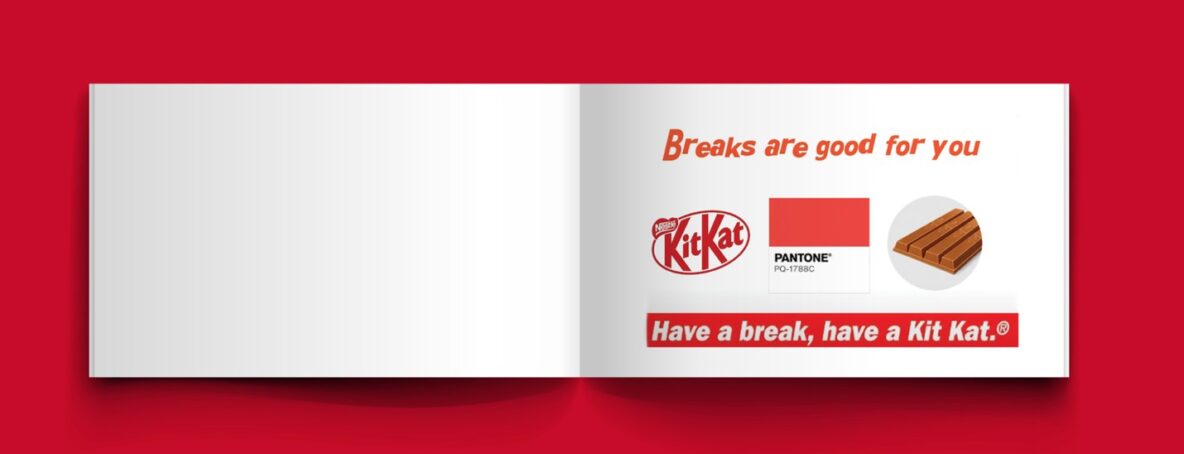
For decades, FMCG brands have understood the use of use cases in marketing. P&G, Unilever and Nestlé, for example, have built certain brands solely around use cases. A good example of this could be KitKat, for example.
Mark Ritson did the whole “adland” a great favor when he stalked KitKat employees and finally got them to share KitKat’s official brand positioning with him. KitKat’s positioning is a great example of how a brand is built on recognizable brand elements and a single moment of use.
Thanks to Byron Sharp and Jenni Romaniuk of the Ehrenberg-Bass Institute, category entry points are now on everyone’s lips, not just traditional brand houses. Countless empirical studies prove that by building a brand at category entry points and being as recognizable as possible, a brand is able to build mental availability in the minds of customers. This, in turn, leads to an increase in penetration.
Basically this means that the more moments of use we as a brand can be the first to come to mind, the more people will buy from us.
Countless empirical studies prove that by building a brand at category entry points and being as recognizable as possible, a brand is able to build mental availability in the minds of customers. This, in turn, leads to an increase in penetration.
What are CEPs in practice?
CEPs are the thoughts that arise in a person’s mind at the very moment when they move from “human” to “buyer”. For example, the moment when you think: “I need something to eat quickly because the meeting starts in half an hour.”
That idea, “a quick snack before a meeting”, is CEP. Not “Subway“, not “Eat & Joy”, but that cognitive cue that activates and reminds us of the number of brands that can solve that problem. A brand that this hint doesn’t bring to mind isn’t in the game.
CEPs are identified by studying the category and its customers using the Ehrenberg-Bass Institute’s model, the seven-Ws framework: Why, When, While, with What, with Whom, Where, hoW feeling.
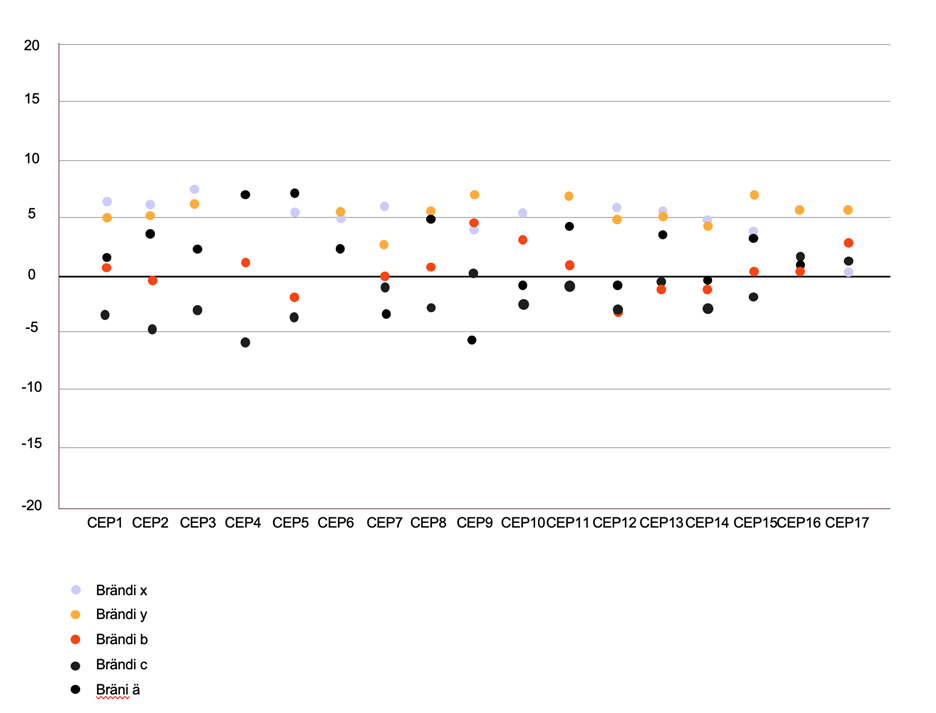
Each W produces a group of clues, and together they map out the moments of entering the category where the brand should settle. A typical category fits into 20–35 clues. The mental availability of a brand is simply the part of these cues that the brand is connected to in memory. It is as simple as that.
What is CEP understanding used for?
The use of CEPs in marketing constitutes a fundamental change based on customer understanding for the entire marketing function:
- In terms of marketing strategy, CEPs should be taken into account as far as possible in brand positioning and target group positioning, without forgetting strategic goals, of course.
- In creative design, the visual situation, time, place, social context and emotional state are built into the W’s framework and serve as operational building blocks, for example, in visual narrative.
- In media planning, CEPs can be used for channel selections, daily and seasonal rhythms, contextual allocation and budget allocation. There are several examples.
- In business development, CEPs serve as a source of innovation, for example, in new product development or in the creation of new brands and products for moments of use that the current brand does not yet own. More and more often, product portfolios are built entirely on the CEP mindset.
CEPs will be mapped through a two-stage study.
Analyses should always be selected on a brand-specific basis, depending on the problem situations of the brand and category.
How are CEP studies conducted?
CEPs are mapped through a two-stage survey:
- CEP identification (qualitative feasibility study): which CEPs are present in the category at all
- CEP measurement (quantitative research): how strongly the brands in the category are linked to the identified CEPs
The latter examination is repeated (1–2 times a year), the former needs to be updated less frequently.
Once the research has been completed, we move on to strategic analyses. Typically, analyses are produced at four different levels: category level, heavy buyers, medium buyers and light buyers analyses. This is related to the main principles of mental availability and growth defined by the Ehrenberg-Bass Institute.
Although there is a lot of work to be done on analyses, they should always be selected on a brand-specific basis, depending on the problem situations of the brand and category. At its simplest, the analysis proceeds as follows:
- Identify and prioritize CEPs
- Map the brand’s current position against the CEPs
- Compare competitors with MMS metrics
- Diagnose strengths, weaknesses, whitespace opportunities
- Translate into prioritized assignment briefs (creative + media)
How is the success of brands monitored in CEP moments?
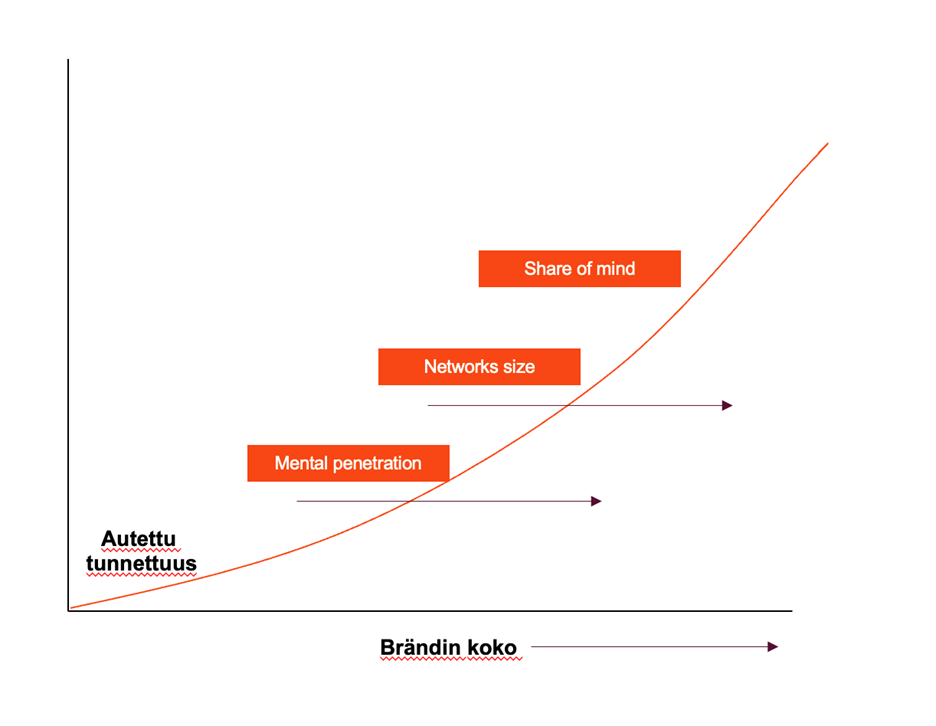
Autettu tunnettuus = Aided awareness, Brändin koko = Brand size
As a bonus, the CEP survey also provides a set of indicators that tell about the success of marketing on a new level. These metrics include Mental Penetration, Network size, and Share of Mind.
MPen % = % of respondents who link a brand to at least one CEP
Network Size = average CEP per brand-aware respondent
Share of Mind = share of brand mentions of all brand mentions in CEPs
The higher the number, the stronger the brand and its mental availability in the moments leading up to the purchase. These are exactly the much-needed hard metrics that link brand development to business growth. Interesting, isn’t it!
As a bonus, the CEP survey also provides a set of indicators that tell about the success of marketing on a new level.
These metrics include Mental Penetration, Network size, and Share of Mind.
Is CEP thinking the only right way to seek growth for a brand?
Finally, perhaps a small mention that for all brands, category entry points alone are not a shortcut to happiness. In my opinion, brand images still matter in brand building, no matter what Byron Sharp thinks about it. Marketers should put the best theories and models into practice from their own perspective and leverage those that have a significant business impact.
In addition to category entry point thinking, it is indeed recommended to study how images affect the different stages of the purchase path (Brand Driver Analysis), how recognizable brand elements are (Distinctive Asset Grid), and what kind of impact creative work and media choices have on success.
Marketers should put the best theories and models into practice from their own perspective and leverage those that have a significant business impact.
We can’t all be KitKats. The whole is made up of pieces, and it is up to marketers to find the right building blocks for their own brand.
In this selection, we help with solid experience in many industries, numerous CEP research projects and other data-driven brand strategies. Contact us and let’s talk!
AUTHOR

Brand Strategy Director
LinkedIn
Brand Strategy Director, who, in addition to brand management, brand strategy and marketing strategy, has a passion for bouldering, racket sports and his own circle of friends for a relaxed evening. Jukka has a burning desire to develop his own professional skills and the efficiency of customers’ marketing.
Read more of our thoughts
-
 CATEGORY ENTRY POINT – Does your brand come to mind when customers are ready to buy?CEPs, or Category Entry Points, are the moments, thoughts and situations that lead to the…Read the blog
 -
 Brand words or Brand actions?You have built a great foundation for your brand. We have studied the market, defined…Read the blog
 -
 Which marketing management should invest in right now – customer experience or brand?Asiakaskokemus syntyy aina, johti sitä tai ei. Erinomainen asiakaskokemus buustaa brändiä, kehno tärvelee sitä. Mitä markkinointijohdon tulee tehdä?Read the blog