


Strategy in a time of uncertainty

The operating environment of organizations is changing faster than strategies can be updated. Global risks and the ecological boundaries of the Earth simultaneously shape the conditions for business. An increasing number of management teams are currently pondering the same question: which changes should be reacted to immediately, what should they adapt to, and what should they try to influence in the long term?
Megatrends, global risks and planetary boundaries as drivers of decision-making
We have examined these questions with several management teams as part of our strategy work. The challenge is not a lack of information, but perceiving the big picture and making decisions in an uncertain situation.
“There is a lot of information, but it is difficult to say what is really relevant to us.”
“Changes are happening on so many levels at the same time that the situational picture easily falls apart.”
“It wasn’t until we stopped to look at the situation together that we started to understand what we really should do.”
It is precisely this pain that anticipation eases. It helps to structure the change, identify the essential impacts of decisions and build a common vision on which strategic choices can be made.
How to structure change, identify material risks and make decisions in a situation where not all information is yet available?
Why is it topical to understand the changes in operating environments right now?
Planetary boundaries, megatrends and global risks are not separate phenomena. Together, they will determine what the future of our planet will be like. These changes are happening simultaneously on many fronts, and they are interconnected in ways that shape the foundation of everything. That is why strategy work is about making choices in uncertainty. How to structure change, identify material risks and make decisions in a situation where not all information is yet available?
Strategy in the grip of three frames
The strategy can be examined through the framework of three phenomena. They describe the boundary conditions for the activities, the time span in which the change takes place, and how uncertainty materializes in decision-making.
Boundary conditions – sustainability and planetary boundaries
The first of these is planetary boundaries. The Stockholm Resilience Centre estimates that seven of the nine limits have already been crossed. Changes in the state of nature can be seen, for example, in the availability of raw materials, costs and production chains. That is why ecological boundary conditions are increasingly also a strategic issue for companies. At the same time, the transition towards a more sustainable economy creates new markets for those companies that are able to renew themselves in time.
Time spans – short and long change
Another perspective is the accelerating pace of change. The acceleration of digitalisation, the ageing of the population, urbanisation, climate change and biodiversity loss will shape the operating environment in the long term. For companies, megatrends primarily tell us in which direction the market and society have already moved. In the short term, operational changes and immediate pressures will be emphasised, while in the long term, megatrends will shape the structure of markets and society.
Uncertainty – risks and opportunities
The third perspective is global risks. The World Economic Forum examines risks over different time spans. In the short term, geopolitical uncertainty, economic tensions and information influencing will be emphasised, while in the longer term (10 years), risks related to climate change, biodiversity loss and the scarcity of natural resources will become central. At the same time, the same phenomena that appear as risks also open up new business opportunities for those organizations that are able to anticipate change and act in time.
Strategy work cannot rely solely on an analysis of the current state, but it must also examine how different developments may affect operations in the coming years.
Uncertainty as a management issue
It is increasingly difficult to predict the development of the operating environment. Therefore, strategy work cannot rely solely on an analysis of the current state, but must also examine how different developments may affect operations in the coming years. Strategic choices guide investments, innovations and the use of resources. Through them, companies have an impact on what kind of solutions will be created in the coming years and in what kind of economic and ecological environment business can be conducted.
Foresight is a key part of this work. It helps to identify material changes, challenge the assumptions behind the strategy and guide decision-making in a situation where not all information is yet available. Organizations that make systematic use of foresight are able to make more informed choices and move earlier than those that make decisions based on past knowledge.
What does this mean in practice right now?
In strategy work, it is increasingly important to examine changes in the operating environment as part of decision-making. Above all, this means building a common situational picture of one’s own industry and business. At the same time, it is important to critically examine the assumptions behind the strategy. Where do we expect stability to continue even though the operating environment changes? What assumptions are based on the past world?
When these questions are brought into the discussion, new opportunities can also be identified. Competitive advantage often arises from seeing the direction of change in time and being able to seize it.
Three questions for the management team
- Which changes will have the greatest impact on our operations in the coming years?
- What will happen if we continue with the current operating model?
- Which risks should be prepared for immediately and what opportunities are associated with changes?
Competitive advantage often arises from seeing the direction of change in time and being able to seize it.
When is help needed to manage uncertainty?
Contact us when your organization is considering the effects of changes in the operating environment on strategy, the use of foresight in decision-making, or the strengthening of future capabilities.
We help to build a common situational picture and clarify strategic choices. The working method is always tailored to the situation of the organization.
AUTHOR
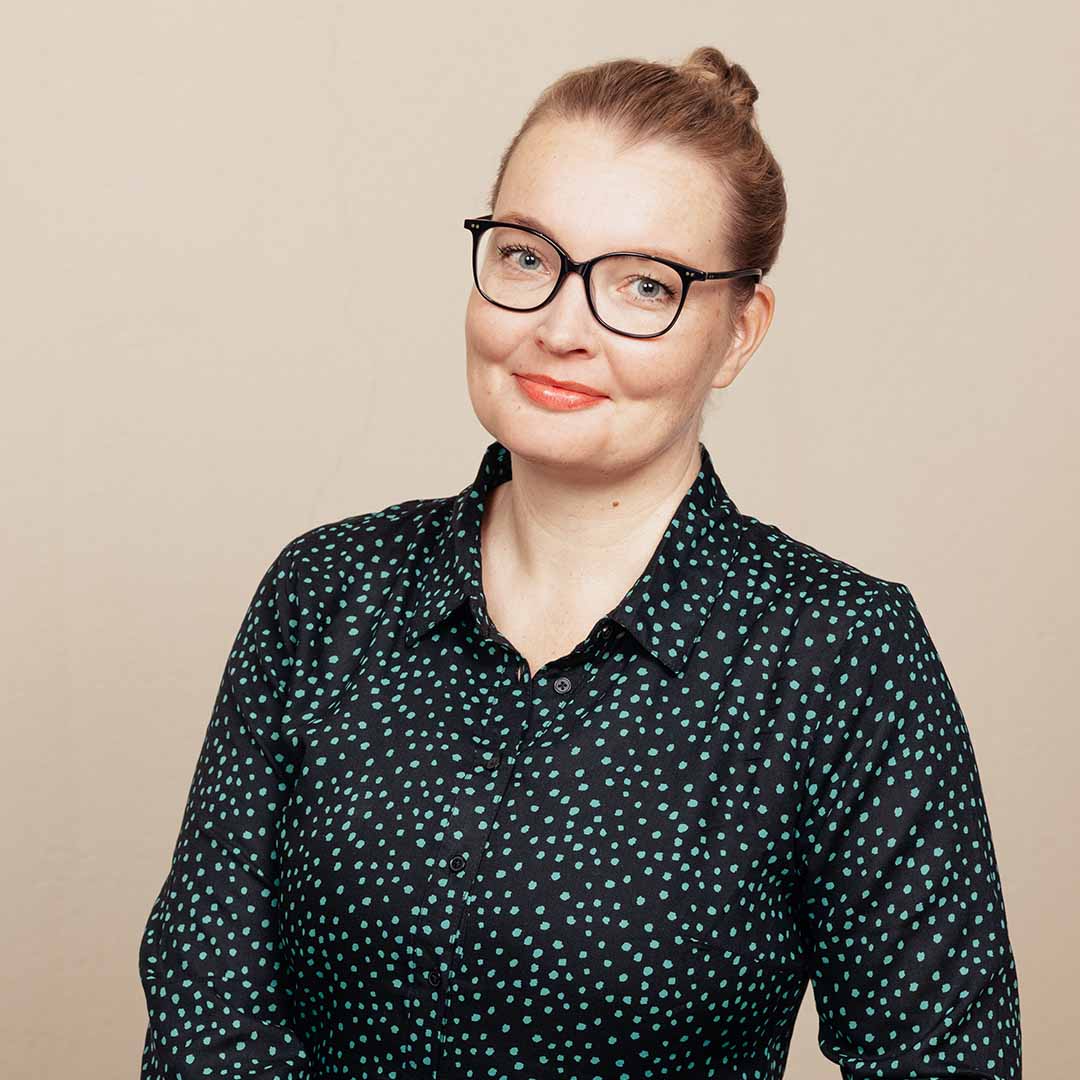
Director, Sustainability and Lead Strategist
Leena Kivioja works with sustainable strategy, foresight, and long-term business development. She helps organizations clarify their strategic direction, strengthen sustainable value creation, and turn strategic choices into everyday action. Leena serves on the board of the Finnish Society for Futures Studies.
Contact Leena for more information about our responsible marketing services.
Sources:
Sitra. Megatrendit 2026
World Economic Forum. Global Risks Report 2026
Stockholm Resilience Centre. Planetary Boundaries Framework
Read more of our thoughts
-
 Strategy in a time of uncertaintyThe operating environment of organizations is changing faster than strategies can be updated. Global risks…Read the blog
 -
 Social First needs a kick in the ass!From a hero flick produced with a lot of money, cuts are still cut into…Read the blog
 -
 Building brand experience in the age of AI: Swap AI tinkering for process blastingIf your company´s AI strategy is for humans to chat with AI, you don’t have…Read the blog